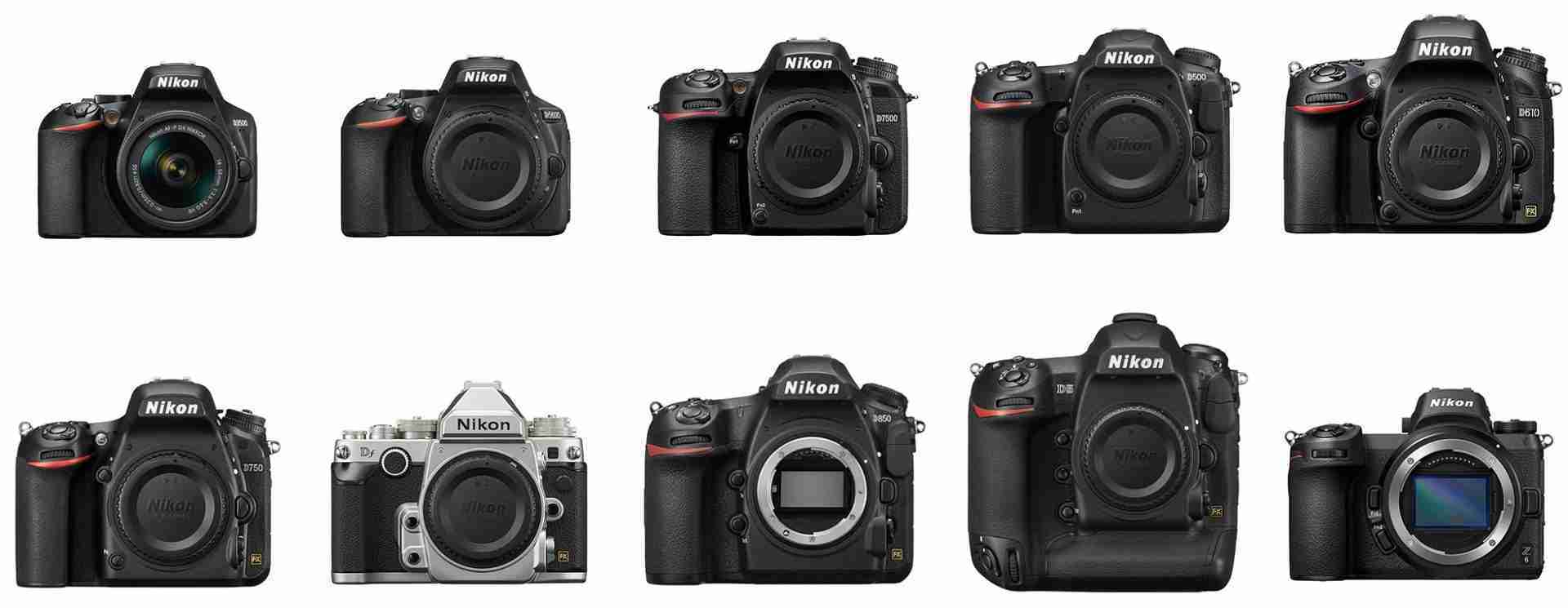
I think that the camera in photography is only a means. The choice of this means can expand or reduce our creative possibilities, but sometimes it can also reduce them due to automatic functions and difficult technicalities.
Unless you are a professional or a really advanced amateur, you should consider the idea of buying a used camera, especially if you are a beginner who is buying the first digital SLR.
Before buying a camera, you should ask yourself to what level your passion can develop. However, it remains a fact that taking a look at the second-hand market can save you money and enter the world of digital SLRs, perhaps with some extra lenses.
A question I always ask those who ask me what camera to buy is “what do you need to do, what do you want to photograph, how much and in what conditions?” The reason is that in reality, in field work, there are not millions of specific needs that a camera body must have. Often, the tangible benefits between a new model or an older or used one are negligible in practice.
Therefore, when making a decision, on which model and whether it is used or not, you should first evaluate what specific needs you have in your personal photographic vision. For those entering the world of photography today, the advice is definitely to start with an old used model. As they say, minimal expense, maximum return.
Many of you will say, “I don’t trust used materials.” I can understand that, there are many “junk” out there, but it is also true that if you get help from an experienced friend, a professional or a trusted photo dealer, you can find machines in perfect condition used.

Can you trust a used digital SLR?
The usual enigma is that “used” means worn out, lower quality, less reliability, shorter lifespan. This may make sense if we are talking about electronic and mechanical components of poor quality. But for well-known brands such as Nikon, Canon, Sony, Fuji, etc., we can say that from an electronics point of view, the quality is very high.
Even the case, that is, the camera body, even if made of plastic, has an almost eternal life. I have tried to use machines that are 10 or more years old, apart from the wear of the paint and some scratches, the mechanical functionality was still perfect.
Reflex cameras are quite robust, as one who uses them on walls, at -40°, in the jungle, in short, in environmental conditions that certainly easily wear out mechanical parts. The life expectancy of a mid to high-end reflex can also be more than 10 years, except for moving mechanical parts.
Therefore, the shutter count, that is, how many times the shutter has worked, remains the measure of wear and tear of a reflex.
If it is a reflex capable of shooting videos, another wearing factor could be measured in the hours of operation with the live-view sensor and recording. Even if in this case the shutter is always open, so not moving, in many reflexes while shooting videos, the sensor heats up considerably. Sensor manufacturers like Sony provide an average time before a failure occurs during sensor use. If we think about when we take a photo, the sensor remains on for short fractions of a second, but if we talk about video, it works on for more than half an hour in a row. This is where the seconds of operation begin to become hours. To give an example, Sony indicates 76,000 hours of operation before a failure can occur for a 36Mpix sensor in its range. (That’s 8.7 years of continuous use on). Probably some pixels may burn out even earlier.
“Definitely, using a DSLR camera for video reduces the life of the sensor, so if a DSLR is used only for photos or photos+video, its wear and tear changes.

What rule can I use to determine whether a used camera is more or less worn out?
The general rule is:
Entry-level digital SLRs typically last at least 50-100,000 shots.
Mid-level digital SLRs typically last at least 100,000-200,000 shots.
Professional digital SLRs typically last at least 300-500,000 shots.
For video, there is no way to know the operating hours. At the moment, I have not found software that informs you of the operating hours like there is for hard drives.
Therefore, I would tend to avoid buying used SLRs for shooting video as the sensor’s lifespan will certainly be reduced. However, it should be noted that if you use that SLR for taking photos, the shutter will break before the first hot pixel appears at low ISOs.
The moral of the story? There is nothing wrong with buying a used camera because there is a good chance it will still survive for a long time.
Is it possible to know how many shots a reflex camera has taken?
Yes, there are online tools and apps that, given a camera’s raw file, can provide you with this information. One of these services is https://www.camerashuttercount.com/
You can also read my article on how to find out how many shutter actuations a camera has.
The value of a used reflex camera
Despite the fact that the quality of a used reflex camera can be good, its value can quickly depreciate, as is also the case with new cameras after one or two years on the market. The market for digital reflex cameras is always in flux, with new models coming out every six months, which obviously devalue both models still on the market and used ones. It’s different for “vintage” film cameras. In this case, the price can even rise over the years due to collectability.
For those looking to buy a used camera, what happens is a significant economic advantage. It is possible to buy a used professional-level camera at the price of a new amateur-level one. Of course, when buying used, it is necessary to spend some time searching on sites like eBay or Amazon.
Cosmetic defects?
When we buy used, we can see how the reflex camera has been used. While the fact that the camera has scratches or scrapes on the back may not be important from a mechanical functioning point of view, this evaluation can give us information about the type of life the camera has had. Scratches and dents can indicate excessive wear or falls. Small scratches or paint chips are certainly less serious than dents and deep grooves, or rubber that is peeling off. When evaluating a purchase, these are determining factors in the price and future durability of the camera.

So what should you consider?
Presence of dents, dings, deep grooves
Worn out, peeling rubber
Shutter shows signs of wear, scratches or when moved under a lamp light, it shows various reflections indicating deformations.
Presence of halos on the LCD display (the camera may have fallen into water)
Presence of halos, scratches, dirt inside the sensor chamber or on the sensor.
Sticky or hard buttons
Worn out or dirty USB, network, flash slots.
Worn-out mount (can be replaced inexpensively)

Batteries?
Regarding battery life, it is very limited. Normally a lithium battery can last between 2 and 4 years, it depends a lot on the climatic conditions of use and how many charge/discharge cycles it has undergone. My advice is to buy a new battery along with the camera.
Online purchase
If you buy online, since it is not possible to personally view these aspects, I recommend turning to sellers or sites where you can return the product if you consider it not conforming. Amazon, for example, has a return policy like many sellers on eBay that offer a 3-6 month warranty.
Good deals.